

China's hosting of the 2026 APEC Economic Leaders' Meeting in Shenzhen, Guangdong province, signals the country's commitment to an open economy and global connectivity, former Singaporean foreign minister George Yeo has said.
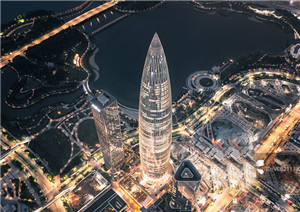
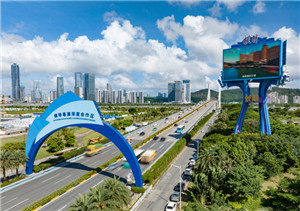
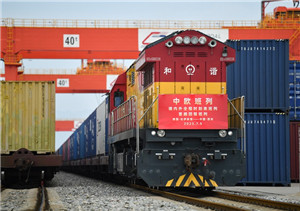
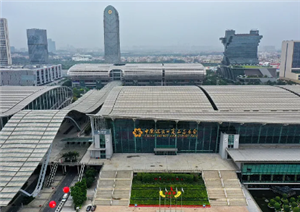
The choice of Shenzhen carries particular significance, demonstrating that China is committed to external circulation and to being connected to the rest of the world, Yeo said in an exclusive interview with China Daily ahead of the upcoming meeting.
The choice was very deliberate because Shenzhen is identified as a part of the Greater Bay Area, which connects Guangdong with Hong Kong and Macao, he noted.
"It sends a signal to everybody in China and to the world that China will continue to be externally oriented," he said.
The APEC meeting is unique as it doesn't strive for hard agreements, which require intense negotiations, Yeo said, adding that it provides a relatively informal platform for the economies to exchange views.
Yeo, who has also served as Singapore's minister for trade and industry, recalled that APEC meetings were positively regarded by government officials and business leaders, partly because they allowed participants to engage with one another in a less stressful environment.
He first became involved with APEC when it was created in Canberra in 1989 as a ministerial meeting, and has watched APEC's evolution.
Yeo said he still vividly remembers the "good atmosphere" of the APEC meeting hosted by China in Shanghai in 2001. The meeting in Beijing in 2014, he added, "was a further step forward".
China has become stronger and more influential in the world, Yeo said.
The former minister also underscored that regional economies want the Pacific to remain peaceful and bonded through open trade and mutually beneficial investment.
Economies on both sides of the Pacific are eager to maintain economic connections, he said, citing Mexico, Chile and Peru as examples of economies seeking trade opportunities beyond their own hemisphere.
"All of the economies have a shared interest in maintaining peace and cooperation across this vast ocean," he said.
Regarding the relationship between China and the United States, the two largest economies in the Asia-Pacific region, Yeo said that in the short and medium term, their ties are likely to remain stable, and that stability is what regional economies hope to see.
"US-China relations are based not on ideology but on mutual interests," he said.
When the US and China have differences, Yeo said, it's like "father and mother quarreling".
"Everybody feels tense, everybody feels insecure, and frankly no one wants to take sides," he said.


Copyright © Foreign Affairs Office, People's Government of Guangdong Province. All rights reserved.