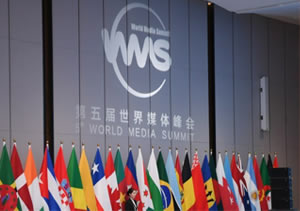
Tearing down barriers to mutual understanding, respect and economic links among different nations is imperative for the Asia-Pacific region in the face of common challenges in the era of climate change and artificial intelligence, senior officials, media executives and scholars said.
Spend more than a few minutes in the workshop at the CGN Lufeng Nuclear Power Project in Guangdong province, and it is hard to miss the robot dog checking fire safety.
Shenzhen today represents innovation and transformation, said Felix Paz, general director of the Peruvian news agency Andina, at the Asia-Pacific Media Forum in Shenzhen, Guangdong province, on Saturday. Openness, innovation, and cooperation — the three priorities China has proposed for APEC 2026 — can also guide the future of media, because open communication listens, innovative communication drives change, and communication that seeks cooperation builds bridges, he said.
"Meaningful change can only come with a well-informed and engaged public," said Melissa Fleming, under-secretary-general for global communications at the United Nations.
"Drive digital and intelligent transformation and connectivity across the Asia-Pacific," said Zhu Min, former deputy governor of the People's Bank of China, at the Asia-Pacific Media Forum in Shenzhen on Saturday.
At the Asia-Pacific Media Forum in Shenzhen on Saturday, Sharachchandra Bhandary, executive editor of Nepal's National News Agency, described the recent mudslide on the border with China as a catastrophic natural disaster beyond his country's capacity to handle alone.
A group of Asia-Pacific scholars and media practitioners got a first hand experience of Guangzhou Metro Line 18, praising its efficient and well kept services.