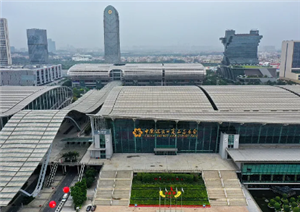
Experts expect Shenzhen APEC to boost tech cooperation with Busan
Companies in Busan, a major industrial and logistics hub in South Korea, are increasingly seeing China not merely as a production base but as a partner for technology cooperation and supply chain integration, experts said.
They told China Daily that the upcoming APEC Economic Leaders' Meeting in Shenzhen in South China's Guangdong province in November will serve as a catalyst, attracting more business interest in the city regarded as the window of China's opening-up.
"The interest (from the Busan business community in Shenzhen) has clearly increased," said Jung Hyun-min, former vice-mayor of Busan and executive vice-president of Busan Chamber of Commerce and Industry.
"It is not a temporary trend but a structural shift driven by global supply chain restructuring, technological competition and market diversification," Jung said.
Following last year's gathering in Gyeongju, a city 30 minutes from Busan by train, the 33rd Asia-Pacific Economic Cooperation Economic Leaders' Meeting will take place in Shenzhen on Nov 18-19, under the theme "Building an Asia-Pacific Community to Prosper Together".
China has been South Korea's largest trading partner for over two decades, with bilateral trade continuing to expand amid industrial-chain integration. In the first half of 2026, bilateral trade reached $231.33 billion, increasing 47.7 percent year-on-year, according to Chinese customs data.
Jung said Shenzhen, which focuses on innovation and leads in digital transformation, naturally attracts companies from Busan as it is a practical partner for those looking to cooperate with China.
This is because of Shenzhen's unique strength in seamlessly connecting research and development, manufacturing, investment, logistics, and the overseas market within one city cluster, he said.
Since 2022, Shenzhen's total industrial output above designated size and industrial added value have ranked first among Chinese cities, according to Shenzhen Daily.
The city's total research and development expenditure reached 245.3 billion yuan ($36.5 billion) in 2024, with corporate R&D accounting for more than 93 percent, also ranking first nationwide.
"For South Korean companies, especially the tech-based small and medium-sized enterprises in South Korea, this framework is crucial, as the speed of validating an idea directly determines their survival," said Jung.
For example, he noted that the Huaqiangbei parts industry chain in Shenzhen demonstrates remarkable development and validation speed, with some companies even completing prototypes in merely one to two weeks.
Noting that Busan is the world's second-largest transshipment port and part of a major manufacturing cluster in South Korea, Kim Youngjae, president of the Busan Development Institute and the Busan-China Business Forum, said Busan and Shenzhen can complement each other, with Shenzhen supplying advanced components and Busan offering physical test beds.
He said the heads-of-state's bilateral meeting on the sidelines of last year's APEC gathering in South Korea paved the way for renewed economic dialogue.
"If Busan companies form cooperation with those in Shenzhen, I think it could help them not only utilize those technologies, but also open up new markets," Kim said.
Jung, from the Busan Chamber of Commerce and Industry, also said cooperation between the two cities can extend beyond trade into third countries and regional supply chain integration under the Regional Comprehensive Economic Partnership, the world's largest free trade agreement, to which both South Korea and China are signatories.
However, Jung said Busan companies also face various challenges in cooperating with their Chinese peers. These include information asymmetry across the diverse Chinese market, difficulty finding trustworthy partners, barriers such as certification and legal issues, and uncertainty from China-US tensions.
Innovation ecosystem
In response, Jung said the chamber established a formal cooperative relationship with the Shenzhen International Chamber of Commerce, laying the foundation for connecting with China's innovation ecosystem and promoting cross-border economic and trade collaboration.
Moreover, Jung said the cooperation should not be limited to Shenzhen but could also involve other Chinese cities such as the port city of Ningbo, Southwest China's Chengdu, and Shanghai to create greater synergy, involving innovation, maritime logistics, the inland market, finance, and platforms.
As the South Korean government has put great emphasis on semiconductors and physical artificial intelligence, with Busan and neighboring regions among those to host such projects, Kim said it will also provide opportunities for cooperation in clean energy and the high-tech industrial ecosystem.
He also stressed the importance of people-to-people exchanges in laying the foundation for business cooperation, as it can help narrow the information gap and enhance mutual understanding.
"Listening to recent news from the Chinese central government as well as Shenzhen, China is investing heavily in AI … South Korean companies cannot afford to ignore these developments," said Kim.