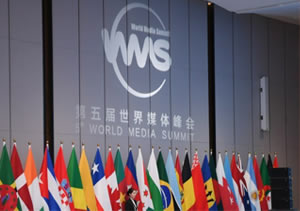


View of DHL's booth during an expo in Shanghai. CHINA DAILY
Logistics services provider DHL announced on Tuesday the start of phased operations at its expanded super gateway at Shenzhen Bao'an International Airport in Guangdong province, as China's industrial upgrading and innovation-driven development create new opportunities for global logistics businesses.
The project, with an investment exceeding 1.2 billion yuan ($177 million), marks the German company's largest single investment on the Chinese mainland.
The expanded facility, built on DHL's existing Shenzhen gateway, has increased daily cargo handling capacity to 900 metric tons, tripling the site's original figure.
John Pearson, CEO of DHL Express, said China's role has fundamentally changed. It is no longer just the world's factory — it is increasingly a global hub for innovation and demand.
"We are seeing explosive growth in cross-border e-commerce, new energy vehicles, lithium batteries and life sciences — high-value, time-sensitive products that demand premium logistics. The new Shenzhen facility is purpose-built to handle exactly this sophistication," Pearson said.
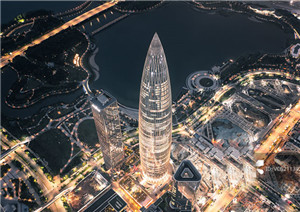
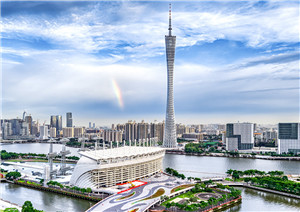
Once fully operational, the super gateway will provide a platform to support additional cargo flights directly from Shenzhen. Premium goods from the Guangdong-Hong Kong-Macao Greater Bay Area — including electronics from Shenzhen, cross-border e-commerce parcels from the provincial capital Guangzhou, and precision components from Dongguan, also in Guangdong, will reach consumers worldwide with greater speed.
Pearson said booming cross-border e-commerce has sharply increased parcel volumes from the GBA, one of China's most dynamic economic regions, to Europe, the Americas and Southeast Asia, prompting DHL to expand its capacity.
Since relocating to the customs supervision area of Shenzhen's airport in 2007, DHL's Shenzhen gateway has long served as a critical facility in the logistics network of South China and the wider Asia-Pacific region. The expansion project was initiated in 2022 and took four years to complete.
Pearson said this move comes against the backdrop of China's steadily resilient foreign trade growth.
Recent foreign trade data also support such a view. China's first-half combined imports and exports grew by 16.9 percent on a yearly basis to 25.47 trillion yuan, said the General Administration of Customs.
Alongside notable export growth in tech-heavy green products such as energy storage systems and electric vehicles, China's first-half trade in hardware that supports computing power surged 56.6 percent year-on-year to 5.13 trillion yuan between January and June.
Remaining optimistic about the opportunities presented by "China Opportunity 2.0", including innovation-driven development, rapid infrastructure upgrades, advances in artificial intelligence and high-end manufacturing, Pearson said China will remain one of DHL's top priority investment markets globally.
China Opportunity 2.0 refers to a new phase of China's development characterized by higher-standard opening-up, technological innovation and high-quality growth.
To support its long-term growth in China, Pearson said the German company will continue investing in infrastructure, air network capacity and last-mile delivery capabilities beyond the new Shenzhen super gateway to expand its network, improve transit times and better serve customers across China.
Zhou Mi, a senior researcher at the Chinese Academy of International Trade and Economic Cooperation, said China's industrial upgrading and export shift toward higher-value goods will sustain demand for premium logistics services and encourage foreign companies to deepen their investment.


Copyright © Foreign Affairs Office, People's Government of Guangdong Province. All rights reserved.