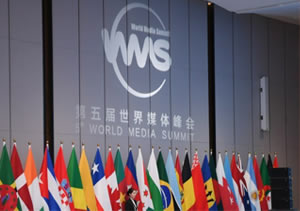
Moiz Farooq speaks at the Asia-Pacific Media Forum in Shenzhen, South China's Guangdong province, on Sept 5. [Photo provided to chinadaily.com.cn]
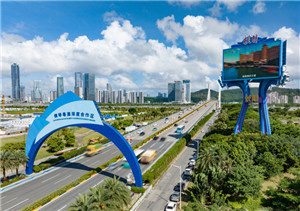
There are cities you visit and cities that make an argument. Shenzhen belongs to the second kind. Some four and a half decades ago it was a modest fishing town on the edge of the Pearl River Delta. Today it is one of the most technologically advanced cities on Earth, and it served as a fitting stage for a gathering about where media in our region is headed.
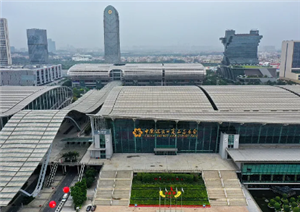
The Asia-Pacific Media Forum opened on Saturday in Shenzhen under the theme "Building a Path to Shared Prosperity for the Asia-Pacific Community: Media Consensus and Action". It brought together more than 400 representatives from over 220 media organizations, think tanks, government agencies, diplomatic missions and international bodies, drawn from 42 countries and regions. As one of the speakers, I came away with three convictions.
The first is that regional media cooperation is finally moving beyond goodwill. Forums often end with warm words and little else. This one produced architecture. At the opening ceremony, 16 founding organizations from China and abroad jointly formed the Organizing Committee of the Asia-Pacific Media Partnership Program, and participants endorsed a Shenzhen Consensus that covers open cooperation, digital, smart and green transformation, and media exchanges. The organizers described this as a shift from "scattered interaction" to "institutionalized collaboration". For those of us in Pakistan who have spent years building media bridges one partnership at a time, that shift matters enormously. Institutions outlast individual enthusiasm.

Moiz Farooq experiences drone flight using a headset and controller at the Asia-Pacific Media Partnership Program. [Photo provided to chinadaily.com.cn]
The second takeaway is that artificial intelligence is no longer a topic for the IT department. It shapes what audiences see, how newsrooms survive and whose stories get told. The forum's cooperation initiative rests on three pillars: technology sharing, joint content creation, and talent cultivation, with plans for an Asia-Pacific Digital & Smart Media Intelligence Shenzhen Center. For media houses across South Asia, many of which struggle to monetize digital audiences, shared tools and training are not a luxury. They may be the difference between relevance and decline.
The third conviction, and the one I stressed in my own remarks, is that the Asia-Pacific must stop outsourcing its narrative. For too long, our societies have learned about one another through intermediaries far removed from our realities. Pakistan and China, for instance, share a relationship of extraordinary depth, yet much of what global audiences hear about China-Pakistan Economic Corridor is framed elsewhere. Joint reporting, co-produced content and exchanges between young journalists can change that. When a reporter from Islamabad and a reporter from Shenzhen investigate a story together, both audiences gain a fuller picture.

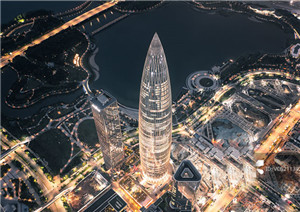
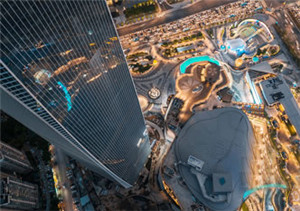
Moiz Farooq poses for a photo at Shenzhen Talent Park, against the backdrop of the iconic "Spring Bamboo" (China Resources Tower) in Nanshan district. [Photo provided to chinadaily.com.cn]
Beyond the conference halls, Shenzhen left its own impressions. The first thing I noticed was the silence of the traffic. Buses and taxis glide past on electric power, and the air feels lighter than one expects in a metropolis of this size. The second were the youths. Almost everyone seemed to be building something: a startup, a product, a career. Walking through the Huaqiangbei electronics market, I understood why the city is called the hardware capital of the world.
Ideas that would take months to prototype elsewhere take days here.
In the evening, the promenade along Shenzhen Bay offered a different face of the city: families cycling, elderly couples dancing, joggers chasing the sunset against a skyline of glass towers. Prosperity here does not feel abstract. It is visible in public spaces that ordinary people actually use.
For a Pakistani observer, Shenzhen carries a particular lesson. Our special economic zones under CPEC were conceived with the Shenzhen model in mind. The city reminds us that such zones succeed not through infrastructure alone, but through policy consistency, openness to talent and a genuine willingness to experiment.
This year marks APEC "China Year", with China hosting the 33rd APEC Economic Leaders' Meeting. The media consensus reached in Shenzhen gives the summit a human dimension. Trade agreements connect economies; journalism connects people.
I left Shenzhen with a notebook full of contacts and a clear sense of purpose. The Asia-Pacific does not lack stories. It lacks the infrastructure to share them with one another directly. In Shenzhen, that infrastructure is taking shape.