China's 15th Five-Year Plan set to bring about fresh momentum for global growth
China's upcoming 15th Five-Year Plan (2026-30) will not only present major opportunities for the country's development, but will also create new momentum for the growth of the global economy, participants said at an international conference that opened on Monday.
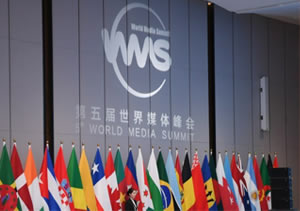
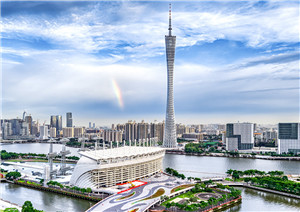
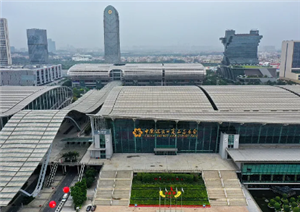
Speaking at the opening ceremony of the 2025 Understanding China Conference in Guangzhou, the capital of Guangdong province, they said this once again underscores that China does not pursue a closed or isolationist path to modernization.
Li Shulei, a member of the Political Bureau of the Communist Party of China Central Committee, said the fourth plenary session of the 20th CPC Central Committee, which adopted the recommendations for formulating the 15th Five-Year Plan, decided that China will expand opening-up at the institutional level, take the initiative to open wider to the world, create greater space for two-way investment cooperation, and pursue high-quality Belt and Road cooperation.
These key decisions provide the policy guarantees needed for China to share its development opportunities with other countries and advance common development, he said.
Li, who is also head of the Publicity Department of the CPC Central Committee, emphasized that opening-up and cooperation for mutual benefit are integral to Chinese modernization.
Former Ethiopian president Mulatu Teshome said that China's 15th Five-Year Plan demonstrates the country's determination to strengthen the foundations for basically achieving socialist modernization by 2035.
"The Chinese path to modernization offers a new choice to developing countries and particularly to African countries, as well as to the Global South at large, by presenting an alternative model to the traditionally conceived perception of Western-style development," Teshome said.
He noted that the Chinese approach is grounded in national realities and features priorities such as high-quality development, common prosperity, harmony between humanity and nature, and innovation.
"The success stories registered by the 'Chinese path to modernization' model offer a new option to other developing nations, and this option, I believe, can contribute to the realization of a community with a shared future for humanity," he said.
Zheng Bijian, founding chairman of the China Institute for Innovation and Development Strategy, said the 15th Five-Year Plan again makes it clear that China will never follow a closed, self-isolating path to modernization.
"On the contrary, we welcome the active participation of countries around the world in China's modernization drive, and view China's reform and development as opportunities for the common progress of all nations," Zheng said.
Andrey Bystritskiy, chairman of the board of the Foundation for Development and Support of the Valdai Discussion Club, a Russian think tank, said that China's domestic success has paved the way for it to play a constructive role in promoting the common development of humanity through its own agenda and a distinctive development model.
Bystritskiy added that the process of Chinese modernization has strengthened China's confidence in its own capabilities, reinforced belief in its development path and injected both immediate and long-term momentum into global development.
Since its launch in 2013, the Understanding China Conference has been held eight times, serving as an important platform for cultural and intellectual exchanges and becoming a key window for the world to observe China's development strategy.
This year's event has gathered a record 800-plus participants from home and abroad including officials, scholars, entrepreneurs and representatives of international organizations.