Passengers in the departure hall of the Huanggang Port in Shenzhen, South China's Guangdong province, Oct 12, 2026. [Photo/Xinhua]
Shenzhen, in South China's Guangdong province, is a model city of Chinese modernization and one of the most remarkable successes in urban development. Designated as one of China's first special economic zones in 1980, this once-small frontier town has become a global hub for advanced manufacturing, technological innovation and international economic exchange. Its economic, technological, social and ecological achievements reflect the interaction of geographic advantages, institutional innovation, human capital and technological progress. Understanding these mechanisms offers valuable lessons for the Global South, and the wider international community.
A defining feature of China's development has been pragmatic coordination between the market's "invisible hand" and the government's "visible hand". Shenzhen exemplifies this approach. Market forces have stimulated entrepreneurship, competition and enterprise creativity, while central and local authorities have provided institutional support, infrastructure, industrial policies and conditions conducive to investment and innovation.
This experience challenges the assumption that government intervention and market mechanisms are inherently contradictory. Properly balanced, they can reinforce each other. The market should play a decisive role in resource allocation, while government provides strategic direction, institutional support and long-term planning. Rooted in China's historical and institutional circumstances, this combination has become a powerful engine of development. Its effectiveness, however, depends on the quality of public policy and the capacity to implement it.
China's rise also demonstrates the importance of effective microeconomic management. Even sound macroeconomic policies cannot deliver satisfactory results unless enterprises and institutions can translate them into practice. This corresponds closely with my experience in leading economic reforms as Poland's deputy prime minister and minister of finance: Professional, efficient microeconomic management is essential to turning macroeconomic objectives into tangible improvements in economic performance and living standards.
Some observers argue that China suffers from "over-industrialization" and should reduce manufacturing in favor of services. The underlying issue is economic restructuring. Chinese authorities have long recognized the need to increase consumption's share of GDP while moderating investment's share, but much remains to be done. China should strengthen its manufacturing advantages while developing services, rather than treating these objectives as alternatives. Artificial intelligence illustrates their complementarity: as a cross-sectoral technology, it can advance both manufacturing and services and therefore deserves strategic investment.
These transformations unfold amid geopolitical tensions and uncertainty. Certain countries are increasingly concerned about China's technological competitiveness and industrial upgrading. One constructive response is to expand joint ventures and international partnerships, combining China's technological capabilities and economies of scale with its partners' intellectual resources, managerial expertise and market knowledge. Such cooperation can help reconcile competing interests and create opportunities for shared development.
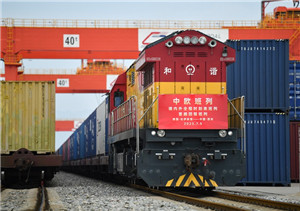
Shenzhen has considerable potential to deepen cooperation with its counterparts in Mexico, Brazil, South Africa and many other countries. And Poland is an important gateway to European markets and a key transit hub for China-Europe freight rail services. This provides a foundation for closer industrial partnerships. Joint ventures could facilitate technological exchange, strengthen competitiveness, and generate mutual economic benefits.
Nevertheless, Shenzhen's success does not mean that special economic zones are appropriate everywhere. During my tenure in government, I approached their establishment in Poland cautiously. Given the country's scale and circumstances, I preferred to transform the whole country into a "large special economic zone" rather than create isolated enclaves of favorable conditions. This ambition was realized to a considerable extent as Poland became one of Central and Eastern Europe's leading economies.
The lesson is not to replicate either Shenzhen's path or Poland's model mechanically. Development strategies must reflect national circumstances. What matters is coordinating market dynamism with government capacity while maintaining clear limits on intervention and preventing excessive expansion of state power. New Pragmatism — a comprehensive system for long-term development policy based on the theory of dynamic equilibrium, with a threefold dimension: economic, social and ecological — requires neither an indiscriminately larger state nor an unconditionally freer market, but an effective relationship between them, judged by development outcomes.
In the future, the international environment will become increasingly complex, and global challenges will remain difficult to resolve. Even when overall conditions improve, benefits will not be distributed equally among countries and regions. Much will depend on the institutions governing globalization, a process that remains irreversible despite setbacks and fragmentation, provided that globalization becomes more inclusive. China's role in shaping these institutions is likely to grow. Visionary leadership and informed debate should guide this influence toward peace, cooperation and mutually beneficial development.
The 33rd APEC Economic Leaders' Meeting, scheduled to be held in Shenzhen on Nov 18-19, offers an opportunity to advance these objectives. Amid geopolitical uncertainty and economic restructuring, its foremost task should be to encourage peaceful accommodation of conflicting interests and differing development philosophies. Cooperation is a prerequisite for sustained growth and improvements in living standards. Economic interdependence should support dialogue rather than become an instrument of confrontation.
China must also confront its domestic challenges. Sustainable development requires more than technological leadership and expanding production. The benefits of modernization must be shared more broadly. Reducing disparity would strengthen social cohesion, consolidate China's development achievements, and provide a firmer foundation for long-term stability and prosperity.
Shenzhen's experience thus illustrates the practical value of a development philosophy combining market mechanisms, capable government, technological innovation and investment in people. Its relevance extends beyond China, but its lessons must be adapted rather than copied. The essential question is how institutions and policies can mobilize local strengths while responding to changing economic, social and environmental needs.
Against a background of protectionism, geopolitical frictions and sluggish global recovery, these lessons acquire particular significance. Global prosperity requires openness, innovation, cooperation and faster progress toward green transformation. It also requires peaceful approaches to international differences and institutions capable of managing shared challenges.
China can contribute by supporting global governance reform, strengthening cooperation with the Global South, and broadening international understanding of development pathways. Its achievements should encourage neither complacency at home nor imitation abroad, but pragmatic learning. The ultimate measure of success is not industrial expansion or technological advancement alone. It is their contribution to better living standards, social inclusion, ecological sustainability and peaceful international relations. That is the purpose of New Pragmatism in practice.