

Foreign officials and scholars have described the Guangdong-Hong Kong-Macao Greater Bay Area as one of the world's most dynamic economic engines, saying its openness, innovation and integrated development are creating new opportunities for countries seeking growth in an increasingly interconnected global economy.
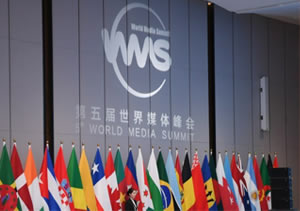
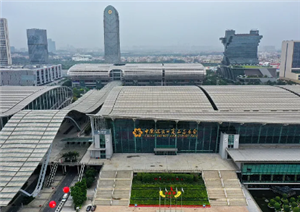
They made the remarks on Thursday in Shenzhen, Guangdong province, at a thematic briefing on the Greater Bay Area, held to showcase China's approach to coordinated regional development and what it has achieved. The event was jointly hosted by the International Department of the Communist Party of China Central Committee and the CPC Guangdong Provincial Committee.
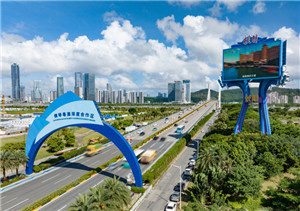
The Greater Bay Area brings together the Hong Kong and Macao special administrative regions and nine mainland cities in Guangdong. One of China's most open and economically dynamic regions, the GBA is being developed into a world-class city cluster. In 2025, the region's economic output exceeded $2 trillion, placing it among the world's leading bay area economies.
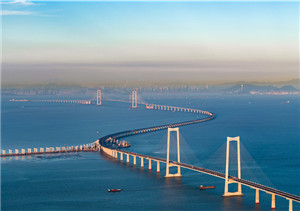
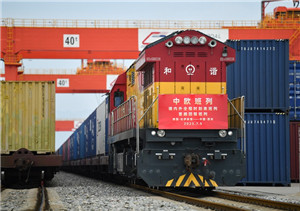
Md Ismail Zabihullah, adviser to the prime minister of Bangladesh, said that the Greater Bay Area shows how openness, long-term planning and policy innovation can reinforce one another. He added that the region's connectivity, innovation-friendly environment, financial support and efficient flow of goods and services have not only reshaped local development, but also created opportunities for countries involved in the Belt and Road Initiative.
Noting Bangladesh's close trade ties with cities in Guangdong, he said his country hopes to strengthen links between its key industries, shipping routes and the Greater Bay Area's globally oriented economy.
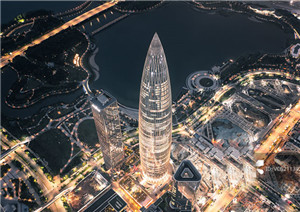
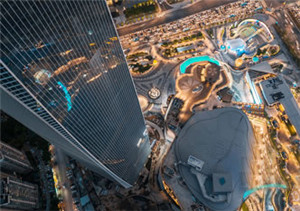
Abdulla Siyaz, the Maldives' minister of state for economic development and trade, said the Greater Bay Area's technological dynamism and development experience have left a deep impression. He described Shenzhen as a major trade and innovation hub whose geographic advantages and global connections could help Maldivian small businesses and startups reach new markets.
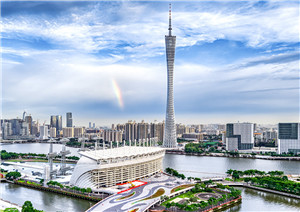
He added that the Maldives had recently opened its first international business center in Nansha district of Guangzhou, Guangdong, to deepen economic ties with China and tap into the Greater Bay Area's commercial networks, and expressed hope that the new platform will help bring more Maldivian aquatic products to international consumers.
Charles Onunaiju, director-general of the Center for China Studies in Nigeria, said that one of the Greater Bay Area's most valuable lessons lies in its ability to bring together the distinct strengths of different cities within a coordinated regional framework.
He added that, as African countries also have different industrial priorities and areas of strength, and greater complementarity across the continent is something that Africa could learn from China's experience of pursuing development and industrialization.
Vlad Batrincea, deputy speaker of the Parliament of Moldova, said that the rise of the Greater Bay Area reflects not a single policy success, but the effective coordination of institutions, infrastructure, research and talent. He said Moldova is paying close attention to how China has integrated industrial policy, investment, education and innovation into a coherent long-term strategy, particularly through industrial clusters, digital transformation and green growth.
Liu Haixing, head of the International Department of the CPC Central Committee, said that the Greater Bay Area's development reflects China's broader strategy of coordinated regional development. He added that as the global economic order and supply-demand cycles face severe disruption, China will work to strengthen economic resilience, bolster internal growth drivers and pursue long-term sustainable development, while advocating innovation-driven growth, openness and win-win cooperation.


Copyright © Foreign Affairs Office, People's Government of Guangdong Province. All rights reserved.