

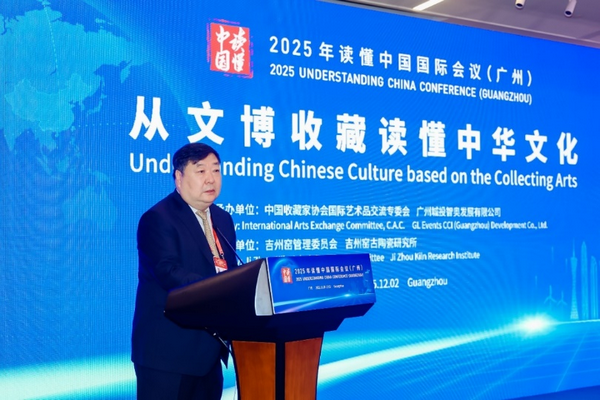
Liu Mingwei, chairman of the China Association of Collectors [Photo provided to chinadaily.com.cn]
GUANGZHOU – The forum "Understanding Chinese Culture through Cultural Relics and Art Collections" and its accompanying art exhibition successfully concluded earlier this month. The event was held as part of the 2025 "Understanding China" International Conference and jointly organized by the International Art Exchange Committee of the China Association of Collectors and Guangzhou City Investment GL Events Development.
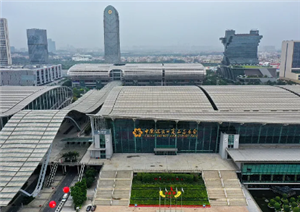
Hosted at the Yuexiu International Convention Center, the forum brought together experts and practitioners to explore how artifacts and collections communicate China's cultural heritage. In his opening address, Liu Mingwei, chairman of the China Association of Collectors, emphasized the vital role of private collections in preserving and sharing traditional culture, noting their importance as a supplement to public institutions.
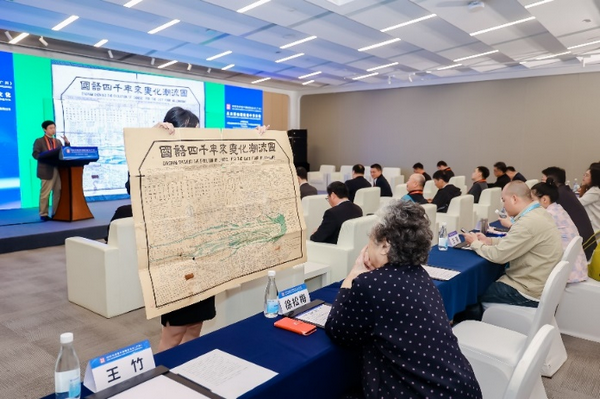
A map tracing the evolution of Chinese characters. [Photo provided to chinadaily.com.cn]
Wang Zhu, president of the International Art Exchange Committee and the forum's chief curator, presented illustrative case studies, including a map tracing the evolution of Chinese characters and the innovative adaptation of snuff bottles in China—an example of how local craftsmanship blends functionality with artistic refinement. Wang stressed how such objects reflect cultural inclusiveness and creativity.
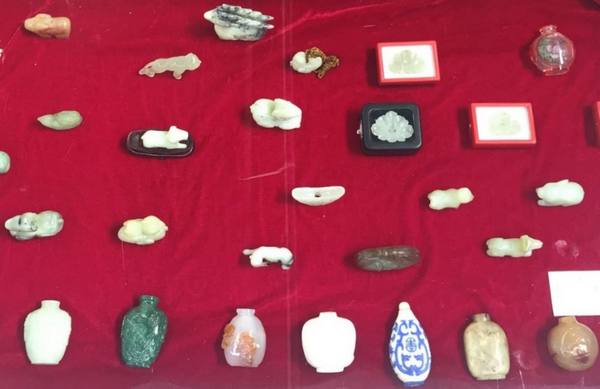
Snuff bottles and artworks exhibited at the forum. [Photo provided to chinadaily.com.cn]

A Chinese scholar ware with Zen design carved in the 18th century. [Photo provided to chinadaily.com.cn]
Discussions also examined traditional auspicious motifs in Chinese art, which embody values of harmony and prosperity. Another session focused on the revival of historic kiln techniques, such as those of the Jizhou kiln, underscoring ongoing efforts to preserve and advance craft heritage.
Professor Wang Peigen of Beijing Open University stressed the importance of anchoring cultural heritage in local context, citing regional arts from Guangdong as key examples. Participants later exchanged views on strengthening collaboration between public and private collections, improving art market practices, and broadening public engagement.
A parallel exhibition featured ceramics, jade, calligraphy, and paintings, complemented by live demonstrations of traditional tea whisking and painting techniques.
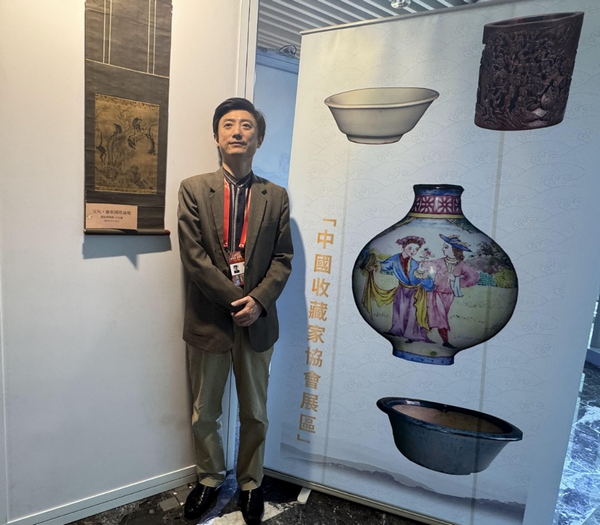
Wang Zhu at the exhibition. [Photo provided to chinadaily.com.cn]
Looking ahead, Wang Zhu highlighted the potential of the Guangdong-Hong Kong-Macao Greater Bay Area to strengthen the cultural artifacts sector. He called for developing local expertise and academic frameworks to better interpret and promote Chinese cultural heritage.
The event demonstrated how collections can act as bridges for cultural dialogue, combining scholarly exchange with visual storytelling to deepen public appreciation of China's artistic legacy.
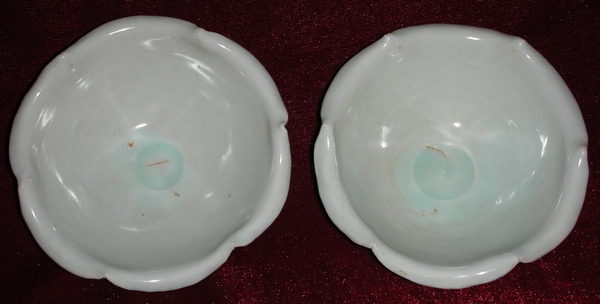
Tea couple bowls made in Jiangxi area during the Song Dynasty (960-1127). [Photo provided to chinadaily.com.cn]


Copyright © Foreign Affairs Office, People's Government of Guangdong Province. All rights reserved.