

Even though the 15th National Games are over, the mascots remain as popular as ever, with netizens affectionately referring to them as the "Greater Bay Chickens".
The mascots, named "Xiyangyang" and "Lerongrong", are based on Chinese white dolphins. However, their round, pink appearance has been said to resemble that of chickens. In Lingnan, there is a traditional saying— "no feast is complete without chicken", and the word "chicken" (ji) sounds the same as the word "lucky" (ji) in Chinese.
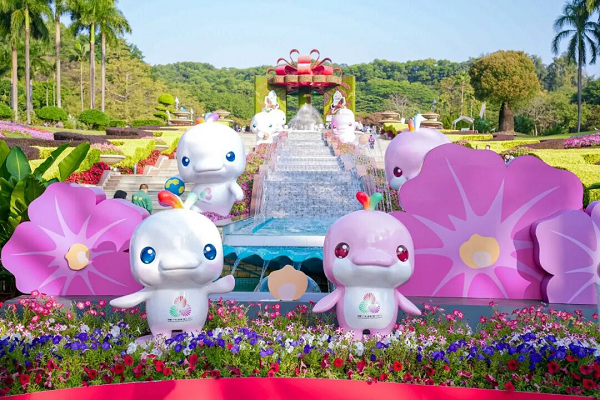
The 15th National Games mascot: a round, pink-and-white figure modeled after the Chinese white dolphin. Its head includes kapok-red, bauhinia-purple, and lotus-green waves — symbolizing the ecological harmony of the Greater Bay Area and unity among the three regions. [Photo/Guangzhou Daily]
Instead of redesigning the mascots to avoid the chicken comparisons, organizers embraced them. They added Cantonese slang and humorous designs to mascot products, showcasing the open, carefree spirit of the Guangdong-Hong Kong-Macao Greater Bay Area.
Recently, a group of 13-to-14-year-old martial arts students wore 8-kilogram costumes of the mascots and interacted spontaneously with passersby, bolstering the mascots' reputation as warm, friendly, and relatable companions
The GBA's robust cultural and creative industry underpins the mascot's lasting popularity. By Nov 15, 2025, sales of licensed products hit 680 million yuan ($95 million).
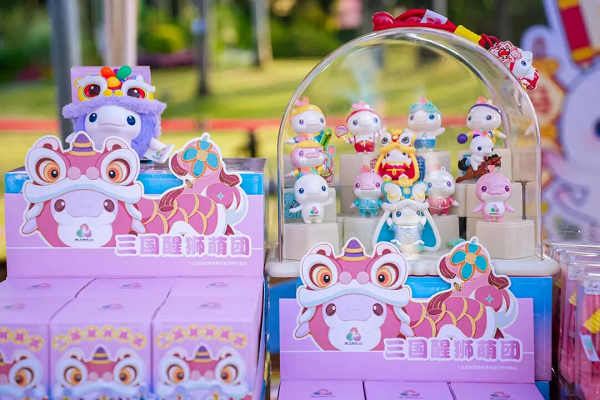
"Greater Bay Chicken" cultural and creative products, with the Three Kingdoms (220-280) Lion Dance Squad, are extremely popular among fans. [Photo/Guangzhou Daily]
The "Greater Bay Chickens" are more than just an amusing symbol for a sports event—they're a great example of how to harness the power of popular culture.


Copyright © Foreign Affairs Office, People's Government of Guangdong Province. All rights reserved.