MA XUEJING/CHINA DAILY
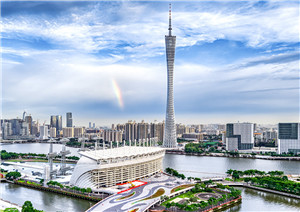
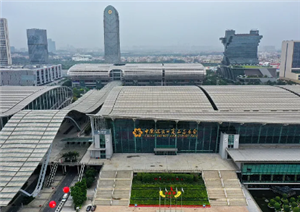
The first Asia-Pacific Economic Cooperation Senior Officials' Meeting and related events are held in Guangzhou, capital of Guangdong province, between Feb 1 and 10, marking the first official event of the "APEC China Year". Focused on the 2026 APEC theme — Building an Asia-Pacific Community to Prosper Together — the events will activate cooperation across various sectors and set the tone for the APEC Economic Leaders' Meeting scheduled to be held in November.
In an increasingly turbulent world riven by geopolitical rivalries and economic fragmentation, APEC stands at a critical juncture concerning its future direction. The APEC "China Year" will be an opportunity to inject stability, certainty and positive energy into Asia-Pacific cooperation and the world economy.
The rise of unilateralism and trade protectionism is eroding the foundation of the existing international order. Whether it is established institutions such as the World Trade Organization and the International Monetary Fund or post-Cold War platforms such as the G20 and APEC, all are experiencing varying degrees of governance dysfunction.
APEC now stands at a critical crossroads. Its rapid growth was driven by "hyper-globalization" in an era when economies broadly agreed on expanding trade, deepening economic cooperation and pursuing shared growth. Today, however, national security and geopolitical anxieties are undermining the willingness to cooperate. Traditional agendas such as upholding free trade and advancing digital cooperation continue to be promoted, but they risk becoming "castles in the air".
The challenges that APEC faces stem from escalating tensions among regional powers. The tariff policy of the United States has disrupted trade and investment in the Asia-Pacific, putting once-efficient and well-defined supply chains under pressure to retreat, relocate or reconfigure. As liberalization in the region stalls, many economies now confront the urgent need to safeguard their economic security and development interests. This has severely constrained the prospects of consensus and economic integration across the Asia-Pacific.
As the golden era of free trade wanes in the face of rising protectionism and diminishing international consensus, APEC must redefine its role and recalibrate its operational mechanisms.
First, while maintaining its core focus on trade and economic cooperation, APEC must adapt to the shifting international landscape. The member economies need to invest more in addressing key geopolitical and economic tensions, aiming to effectively coordinate major power relations, foster practical cooperation and provide platforms for dialogue. By doing so, APEC can help stabilize the region's open and interconnected fundamentals and mitigate the adverse impacts of politics.
Second, APEC should recalibrate its core agenda with a clear understanding of the challenges facing global governance. It must strive to uphold multilateralism, align with the growing influence of the Global South, and promote the establishment of a fairer and more equitable economic and trade order in the Asia-Pacific region.
By prioritizing the interests of the vast majority of its members, APEC could incorporate more economic, financial and sci-tech cooperation into its agenda. This includes promoting the development of regional financial safety nets, enhancing the resilience of science and technology supply chains, and fostering cooperation on critical minerals.
At the same time, APEC should also focus on expanding its membership. By welcoming more Latin American and South Pacific countries, APEC can become more representative. Furthermore, it should strengthen dialogue and collaboration with mechanisms such as BRICS and the Shanghai Cooperation Organization, which would help open new avenues for economic and trade cooperation.
As the world's second-largest economy and the host of 2026 APEC meetings, China is well-positioned to play a constructive role in APEC affairs. In response to the underlying global development bottlenecks and governance challenges, China has introduced several initiatives: the Global Development Initiative, the Global Security Initiative, the Global Civilization Initiative and the Global Governance Initiative. It is also steering the Belt and Road Initiative into a new "golden decade". These public goods have significantly contributed to openness, connectivity, growth and prosperity in the Asia-Pacific region.
Besides, China consistently aims to manage differences rationally and pursue cooperation through constructive dialogue and negotiations with the US in its attempt to dispel the geopolitical tensions hovering over the Asia-Pacific.
APEC is poised to usher in the "China moment". Regardless of how the international landscape evolves, China will continue to uphold a spirit of mutual trust, openness, and inclusiveness to appropriately manage major-country relations, share its market opportunities, investment potentials and growth prospects with the region. This approach will inject greater certainty into Asia-Pacific economic and trade cooperation and accelerate the establishment of a fairer and more equitable economic and trade order in the Asia-Pacific.
The author is the deputy director of the Institute of Macroeconomic and Strategic Studies in the China Institutes of Contemporary International Relations.
The views don't necessarily represent those of China Daily.
If you have a specific expertise, or would like to share your thought about our stories, then send us your writings at opinion@chinadaily.com.cn, and comment@chinadaily.com.cn.