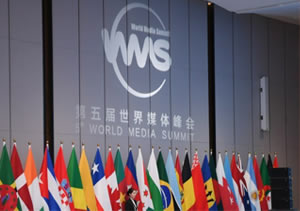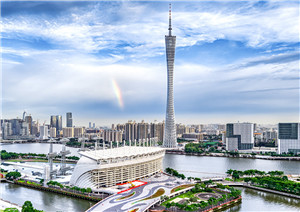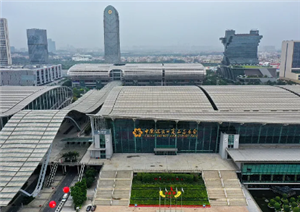


On Feb 10 in Guangzhou, Guangdong province, the opening of the First Asia-Pacific Economic Cooperation 2026 Senior Officials' Meeting offered something that has been in short supply in the global economy lately: a results-oriented conversation about cooperation that is grounded in scale, incentives and realities.
Chinese Foreign Minister Wang Yi's keynote speech at the opening session of the meeting was not just a marker of China's return as APEC host after 12 years; it was also a reminder that the Asia-Pacific now sits at a fork in the road that will influence global growth.
Start with the numbers. According to APEC's own data, its 21 member economies account for roughly 60 percent of global GDP, about 48 percent of world trade, and nearly 40 percent of the world's population. The World Bank estimates that over the past three decades, the Asia-Pacific has contributed more than half of global growth, lifting hundreds of millions of people out of poverty. Yet the International Monetary Fund now warns that medium-term global growth is likely to hover around 3 percent — well below historical averages — while trade growth remains structurally weaker than before the global financial crisis. Given that context, what happens inside APEC is no longer regional housekeeping; it is macroeconomics on a global scale.
Wang's speech squarely addressed the central question: Where is Asia-Pacific development heading in an era threatened by protectionism, unilateralism and economic coercion.
The answer is clear that APEC should continue to pursue its original mission of promoting growth and improving people's well-being through open, inclusive development, reaffirming the DNA that has enabled it to thrive since it was founded more than 30 years ago. The Asia-Pacific's diversity makes rigid blocs unworkable. What is required instead is the flexibility of open regionalism.
Cooperation that complements the global trading system is more relevant today than ever. Trade bullying, technology "de-risking" and attempts at supply-chain "decoupling" are already taking their toll on the region and beyond. The United Nations Conference on Trade and Development estimates that fragmentation of the global economy could shave up to 7 percent off global GDP in the long run, with developing economies bearing the brunt of the blow. For a region as deeply integrated as the Asia-Pacific, the losses would be even larger. This is why Wang's emphasis on strengthening macroeconomic policy coordination, upholding a World Trade Organization-centered multilateral trading system, and advancing the Free Trade Area of the Asia-Pacific needs to be heeded.
The idea of the FTAAP has been circulating within APEC since the mid-2000s. Supply chains that took decades to build are now being stress-tested by geopolitics. According to APEC figures, intermediate goods account for more than 60 percent of intra-APEC trade, underscoring how deeply production networks are intertwined. Efforts to forcibly sever these links risk higher inflation, lower productivity and weaker innovation.
Equally important is Wang's focus on inclusiveness and equity. The World Bank notes that while East Asia's extreme poverty rate fell from over 60 percent in 1990 to under 2 percent today, largely thanks to China's remarkable achievements in this regard, significant gaps remain across and within economies. Supporting developing members, sharing the gains from artificial intelligence and promoting green transformation are necessary investments for the region's future.
China's own trajectory gives weight to that. As the country enters its 15th Five-Year Plan (2026-30) period, its commitment to high-quality opening-up signals that it intends to remain deeply embedded in regional and global markets. For APEC economies, this represents an opportunity to not only share China's development dividends but, more importantly, reciprocate with openness and cooperation.
The Asia-Pacific faces economic headwinds and geopolitical flash points that are tests of trust and cooperation. History suggests that hegemony and zero-sum thinking are poor guides to prosperity. The choice confronting the APEC economies today is stark: double down on openness, consultation and shared benefit, or drift toward fragmentation that leaves no one unscathed.
When APEC was founded, its members made a rational choice based on economic evidence: cooperation beats confrontation. The discussions in Guangzhou — and the agenda China has set around openness, innovation and cooperation — are a call to make that choice again. In a weak world economy, sustaining stable supply chains and inclusive growth in the Asia-Pacific is the least costly option available.


Copyright © Foreign Affairs Office, People's Government of Guangdong Province. All rights reserved.