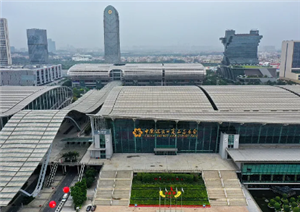


GAC showcases its third-generation humanoid robot, GoMate, at the 33rd Guangzhou Fair in August 2025. CHINA DAILY
Major Chinese and foreign automakers are expanding their presence in the humanoid robot sector, positioning it as a key driver of future growth. Experts note that automakers' factories initially provide critical application scenarios, with many automakers advancing product deployment.
Market researcher GGII projects that global humanoid robot sales will reach nearly 340,000 units by 2030, with a market scale exceeding 64 billion yuan ($9.25 billion). By 2035, sales are expected to surpass 5 million units, representing over 400 billion yuan.
This market offers a path to new growth. Automakers hold inherent advantages in humanoid robotics: intelligent vehicles are essentially wheeled robots, and their core technologies overlap. XPeng CEO He Xiaopeng said that 70 percent of the company's technical reserves are shareable between intelligent vehicles and humanoid robots.
XPeng is building a 110,000-square-meter humanoid robot industrial park at its headquarters in Guangzhou, Guangdong province. More than 500 Iron humanoid robots have been put into trial operation at XPeng's factories in Guangdong province, boosting production efficiency by 30 percent and cutting labor costs by 35 percent, according to XPeng.
The company plans large-scale production of the Iron by the end of 2026 with a monthly production target of over 1,000 units.
Xiaomi's humanoid robots began operating in its factory in March, performing tasks such as self-tapping nut loading and bin handling. They have met the production line's time budget of up to 76 seconds per unit.
GAC revealed its fourth-generation humanoid robot, GoMate Mini, in February, targeting small-batch production in 2026 and mass production in 2027. GoMate is produced on the same production lines as GAC vehicles, validating shared manufacturing equipment, processes and supply chains, while boosting fixed-asset utilization.
Chery's Mornine humanoid robots have entered more than 30 countries and regions, being used in more than 100 scenarios such as factory inspections and showroom services.
The company delivered more than 300 humanoid robots in January, becoming the first automaker globally to achieve large-scale delivery.
US EV maker Tesla announced earlier this year that it will launch the third-generation of its Optimus robot in the first quarter of 2026 and renovate a production line at its Fremont factory in California.
Large-scale production is expected to commence by the end of 2026, with an initial annual production capacity of 50,000 to 100,000 units.
German automaker BMW has launched a humanoid robot pilot project at its Leipzig factory in Germany. The Figure 02 humanoid robot has assisted in the production of more than 30,000 X3 SUVs and is responsible for the positioning of sheet metal prior to welding.
For automakers, developing and testing humanoid robots in their own factories offers a key early path. It provides natural testing grounds and real-world data to accelerate product iteration, laying the groundwork for large-scale deployment, industry experts noted.
Lu Weibing, president of Xiaomi Group, said embodied intelligence remains in the early verification phase, with large-scale factory deployment five years away and gradual integration into people's work and daily lives over the next five to 10 years.
Ji Xuehong, a professor at North China University of Technology, said that human-like perception capabilities and cost control remain two unresolved challenges for the industry.
Currently, one humanoid robot costs between several hundred thousand and 1 million yuan, with core hardware accounting for over 60 percent of total costs — still above what the market finds acceptable. Neither XPeng nor GAC has disclosed expected mass-production pricing.
And limited application remains a concern. Current robot deployments are largely confined to non-core processes like handling, sorting and inspection. Breakthroughs in complex manufacturing tasks have yet to materialize.
Zhou Xiaoying, CEO of industry information platform Gasgoo, cautioned against confusing industry hype with commercial maturity or mistaking demonstration capabilities for operational feasibility. What the industry truly needs, she emphasized, are robots that "can work effectively, collaborate seamlessly and continuously create value".
Meanwhile, supportive policies are accelerating automakers' push into humanoid robots. In March, China released its first top-level standard covering the full industry chain and life cycle of humanoid robots and embodied intelligence, guiding standardization.


Copyright © Foreign Affairs Office, People's Government of Guangdong Province. All rights reserved.