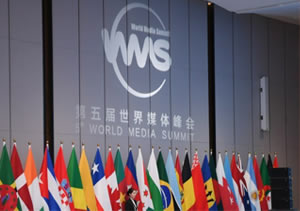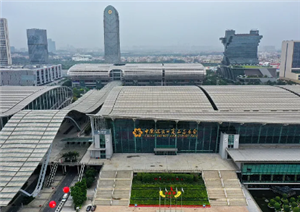


Exhibitors attend the International Talent Forum, the flagship event of Global Talent Summit Week, at the Hong Kong Convention and Exhibition Centre on Wednesday. ANDY CHONG/CHINA DAILY
Hong Kong Chief Executive John Lee Ka-chiu said on Wednesday that the city's future competitiveness hinges on "people, knowledge, creativity and adaptability" as the nation's 15th Five-Year Plan (2026-30) explicitly backs the city's role as a global high-caliber talent hub.
He made the remarks at the opening of the second edition of the Global Talent Summit Week — an annual premier platform showcasing the special administrative region's ability to attract talent from around the world.
The weeklong summit, which has drawn about 7,000 participants this year, features the International Talent Forum and the CareerConnect Expo on Wednesday and Thursday, as well as nine satellite events ranging from recruitment fairs and award ceremonies to conferences focused on human resources.
Lee told the International Talent Forum that the SAR has benefited from "one country, two systems" and received strong support from the nation, while maintaining extensive international connectivity.
The nation's recently approved 15th Five-Year Plan pledges to back Hong Kong in molding itself into an international hub for high-caliber talent.
The SAR's competitiveness, Lee emphasized, no longer depends solely on capital or fiscal infrastructure but, above all, on its people — their knowledge, creativity, and adaptability — as building a global talent hub requires "constant renewal, active engagement and sustained collaboration".
He said that as the global competition for professionals intensifies, Hong Kong must expand opportunities through cooperation and shared progress instead of competing with other regions.
The HKSAR government will further refine education, innovation and infrastructure policies to ensure that the city remains a fertile ground for ideas, and that talent from around the world feels welcomed and supported.
Yu Jiadong, vice-minister of human resources and social security, praised the HKSAR government's "remarkable effectiveness" in talent work, noting that the city's appeal and competitiveness as a destination for global talent is rising continuously.
He said Hong Kong offers a "broad stage and a good environment" for professionals, highlighting the SAR's unique position as the "southern gateway" for global talent entering the mainland and the "bridgehead" for Chinese talent going global.
Yu outlined several areas of support for Hong Kong, including jointly advancing the construction of a high-level talent corridor in the Guangdong-Hong Kong-Macao Greater Bay Area, and exploring mechanisms to streamline the flow of talent. He stressed the need to support Hong Kong's role as a pivot to facilitate collaboration and combine artificial intelligence with education and technological development to foster a new paradigm in talent training.
Basima Abdulrahman, founder of an Iraqi green tech company KESK, said she was drawn to Hong Kong's unique geographical and economic positioning.
"I'm very interested in Hong Kong's global connectivity and the way it's situated between connecting the Middle East and the Chinese mainland," Abdulrahman said. "I think Hong Kong has this blend of unique opportunities — between talent, connectivity, and also the access to funds."
Joe Ngai, chairman of Greater China at McKinsey & Company, acknowledged that Hong Kong already possesses many advantages that attract talent, supported by well-developed supporting facilities and abundant conditions for drawing international professionals.
However, he said the city must continue to evolve. "Given the geopolitical landscape, we need to think about our role, for example, in helping Chinese companies go global. We also need to strengthen our position in technology and artificial intelligence."


Copyright © Foreign Affairs Office, People's Government of Guangdong Province. All rights reserved.