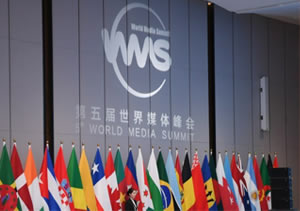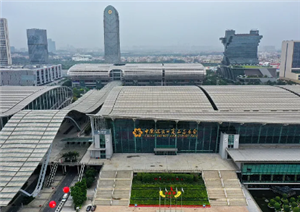


Foreign Minister Wang Yi (center) attends the opening session of the First Senior Officials' Meeting of APEC China 2026 in Guangzhou, Guangdong province, on Tuesday. ZHENG ERQI/CHINA DAILY
Foreign Minister Wang Yi called on Tuesday for closer regional cooperation amid rising unilateralism, growing protectionism and worsening economic fragmentation in the world, in order to build a prosperous, stable, open and interconnected Asia-Pacific community.
Wang made the remarks when addressing the opening session of the first Asia-Pacific Economic Cooperation Senior Officials' Meeting in Guangzhou, Guangdong province. The event precedes the APEC Economic Leaders' Meeting, which is scheduled for Nov 18 and 19 in Shenzhen, Guangdong.
As the world has entered a new period of turbulence and transformation, the challenges facing Asia-Pacific development are mounting and regional economic integration is encountering headwinds, he noted.
"Against this backdrop, China fully recognizes that our third time as APEC host carries with it significant responsibilities as well as a glorious mission," Wang said, referring to the previous APEC leaders' meetings held in 2001 in Shanghai and in 2014 in Beijing.
In order to build a better Asia-Pacific community, he underlined the importance of upholding the postwar international order and the purposes and principles of the United Nations Charter, which he said form the very foundation of prosperity and stability in the Asia-Pacific region and the wider world." This is especially valuable today and deserves to be dearly cherished," he added.
Noting that the Asia-Pacific region owes its success to a peaceful and stable environment, as well as to the APEC economies' commitment to promoting economic globalization and advancing regional economic integration, Wang highlighted the need for member economies to follow the "APEC way" by building consensus through consultation, handling differences properly and keeping regional cooperation on the right track.
"We should strengthen macroeconomic policy coordination, uphold open regionalism, advance trade and investment liberalization and facilitation, ensure the safe and orderly flow of people, goods, capital and data, and build closer industrial and supply chains," he said.
Wang called for safeguarding the multilateral trading system centered on the World Trade Organization and leveraging the guiding role of regional trade arrangements to foster greater connectivity among various regional free trade agreements and gather momentum toward a Free Trade Area of the Asia-Pacific, or FTAAP.
The theme for APEC 2026 is "Building an Asia-Pacific Community to Prosper Together", with "openness, innovation and cooperation" set as the three priorities to realize the vision of building a prosperous and stable Asia-Pacific community.
"We should be more determined than ever to hold high the banner of building an Asia-Pacific community and explore the objectives and road map for community-building in the period ahead," Wang said.
Underscoring that digital, smart and green transformations driven by innovation represent new growth drivers for APEC economies and show the path toward achieving sustainable development, he called for active efforts to build science, technology and innovation partnerships and foster an open innovation ecosystem.
The APEC "China Year" coincides with the launch of the nation's 15th Five-Year Plan (2026-30).
Wang highlighted that China will further deepen reform on all fronts, continue expanding high-standard opening-up, and deliver new opportunities for the Asia-Pacific and the wider world through new achievements of Chinese modernization.
Carlos Kuriyama, director of the Policy Support Unit at the APEC Secretariat, emphasized the role of APEC in today's world against the backdrop of increasing geopolitical tensions.
"We need global solutions for global problems. And why not have APEC as a way to seek consensus, reach understanding, and then use this understanding at the global level? That will be a reward for everyone," he said.
Aleksandr Shavlov, counselor of the Department of Trade Negotiations at the Ministry of Economic Development of the Russian Federation, highlighted China's role in advancing the building of an Asia-Pacific community.
"China is the leading economy to promote certain issues within APEC, such as digitalization, promotion of free trade and FTAAP agendas. We really appreciate China's role in APEC," he said.
As a champion of free trade and open global economy, China has ranked as the world's largest trader in goods and the second largest in services. The Belt and Road Initiative has become a widely welcomed international public good and a major platform for global cooperation.
Liu Wei, director of the Institute of International Studies at the Guangdong Academy of Social Sciences, said that in its efforts to uphold global trade liberalization, China provides the world with better and more competitive products, as well as a vast market, sharing development opportunities with other countries.


Copyright © Foreign Affairs Office, People's Government of Guangdong Province. All rights reserved.